
My Favorite (And Least Favorite) Things About Automations
My Favorite Things About Automations:
- Automation + Chap = Superpower: Combining automation with ChatGPT (Chap) opens up huge potential for complex, personalized workflows. It’s surprisingly straightforward to set up and can be a game-changer for ICP filtering, lead enrichment, personalization, and other lead-gen-focused tasks.
- Scaling Without Hiring: Automations are like hiring extra hands without the overhead of actual employees. You can “hire” automations to do basic lead scraping, database management, or content curation, saving on VA costs and avoiding people-management headaches.
- Automating Repetitive VA Tasks: Use automations to handle simple, repeatable tasks that VAs would otherwise need to do one by one. Saves time and cuts down on manual errors.
- Cheaper Cost Per Lead (CPL): Batching workflows and automating data gathering allows you to optimize costs by reducing the number of API calls or processing “batches” rather than doing things one-by-one, keeping your CPL low while maximizing reach. You can also often hit a MUCH lower CPL from a good automation than you could get from a VA. (Minimum CPL with a VA is $0.05, and many automations I’ve built run for under $0.01 CPL!)
My ANTI-Favorite Things:
- They’re Often Better in Theory Than Reality: On paper, automations sound like perfect solutions. In reality, they frequently don’t work for strange, inexplicable reasons, leading you to wonder if a VA would’ve been simpler.
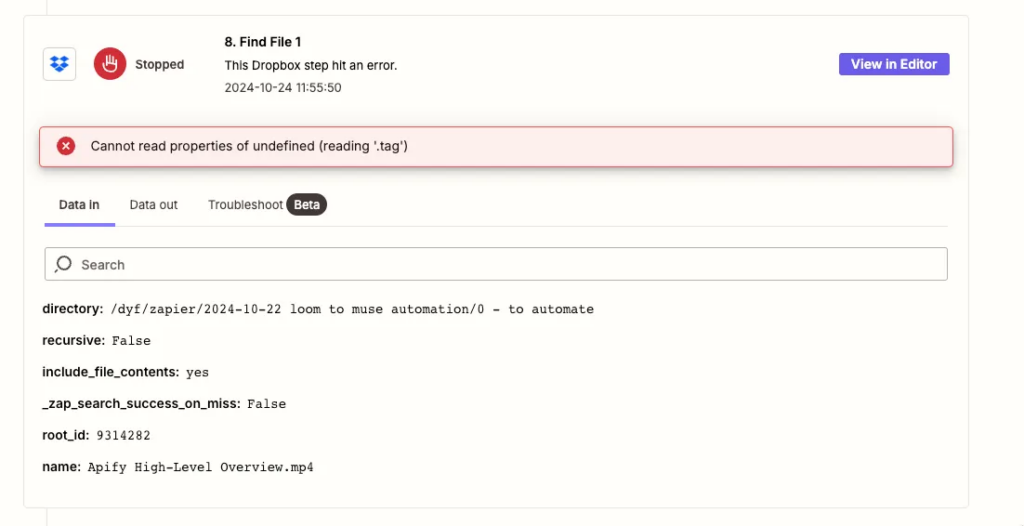
- Example error: “Cannot read properties of undefined (reading ‘.tag’)” — WTF does that even mean?
- Fragile Chain Reactions: Automations only work as reliably as the weakest link in the setup. It’s common to spend 30 minutes getting 90% of an automation running, then hours debugging the last 10% because of one faulty step.
- Unreliable API and Format Changes: Automations relying on external APIs or scraping are prone to breaking whenever a website changes its structure or an API updates, which requires constant monitoring.
- Potential Maintenance “Time Costs”: Regular debugging and upkeep can make automations more time-consuming than expected. Between unexpected issues and shifting needs, they often need frequent tweaking to keep running smoothly.
- Debugging Sinks: Debugging automations can be a rabbit hole. Simple issues can escalate into hours of trial and error, especially if the automation relies on multiple apps or has conditional steps. One glitchy variable can stall an entire chain.
- High Upfront Setup Time: While automations save time in the long run, the initial setup can take hours, especially if you’re building complex workflows. A task you’d normally give to a VA might take just as long – or far, far longer – to set up as an automation, meaning you don’t break even on time savings until later.
- Random Timeouts & Rate Limits: Platforms like Make and Zapier sometimes throttle requests or trigger rate limits, especially when handling high volumes of data. This means automations that should work smoothly can halt unpredictably, which is a pain to manage and fix.
- Credit Usage Surprise: Tools like Make run on credit systems, which can add up if you’re iterating through large lists or using CPU-intensive actions. If you’re not careful, a high-cost automation could chew through credits fast, surprising you with unexpected charges. Sometimes, if an automation is built inefficiently, it might even cost you more per lead than if you’d just had a VA do it!
- Over-automation Can Kill Agility: Once you’re committed to a complex automation, changing the workflow becomes a hassle. It’s easier to adapt a VA than to rewire an automation when you want to pivot or adjust how tasks get done.
- Inconsistent Error Messaging: Platforms like Zapier and Make don’t always have intuitive error logs, especially with advanced workflows. You can end up staring at cryptic messages that give no clear direction on how to fix the issue, adding to frustration.